AS EXPECTED and widely predicted, Barisan Nasional (BN) in an electoral alliance with Perikatan Nasional (PN) emerged victorious in the Melaka state election held on Saturday (Nov 14).
BN which scored a hattrick in the state polls (after Johor and Negeri Sembilan) won all 24 seats it contested while its electoral ally PN secured three seats – two for PAS and one for Wawasan.
Together, the two coalitions command a super-majority in the state assembly which gives them a strong mandate to govern Melaka.
The victory also sends a message to Prime Minister Datuk Seri Anwar Ibrahim whether he wants to proceed with the unnecessary Cabinet reshuffle or call for an early general election (before February 2028).
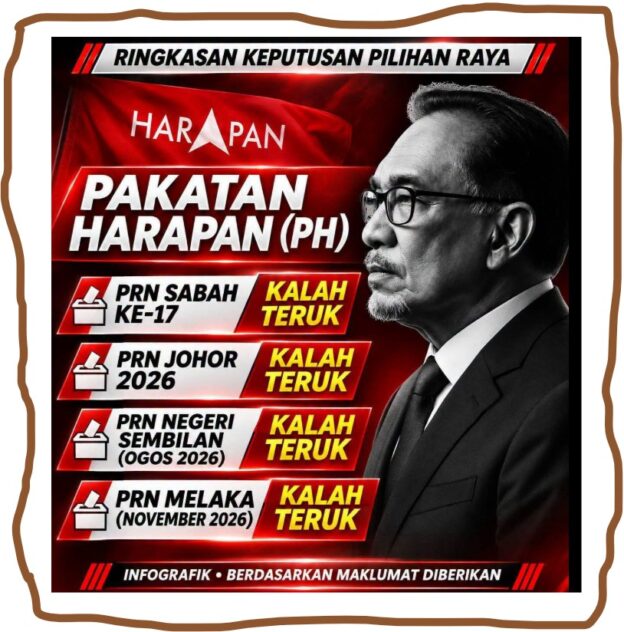
Pakatan Harapan (PH) which contested 24 seats managed to win only four – all through DAP which contested seven seats It appears that without the Rocket, the national ruling coalition would have ended up with zero seats.

PKR’s string of misfortune
DAP retained its support in the two Chinese-majority constituencies and secured victories in two mixed constituencies.
Again, PKR – despite contesting the largest number of seats within PH at 10 – suffered a humiliating defeat by being completely wiped out.
Although Anwar is helms PKR, the party’s performance of not just in the Melaka state election but also in the earlier polls calls into question the continued relevance of the party in the country.
Amanah, meanwhile, lost its vice-president Adly Zahari’s Bukit Katil seat to PAS. The PAS splinter party is neither alive nor dead with a 7-0 drubbing.
So much for the leadership of Datuk Seri Mohamad Sabu who recently suggested to the civil society organisations to pressure the Madani government to extend house arrest for other convicted criminals.
Adly, the former chief minister and PH’s designated candidate for the Melaka chief ministership, suffered a particularly damaging personal defeat.
Bersatu which had earlier entered into an electoral arrangement with PH also suffered a major setback. It lost all four seats it contested while its three allies failed to secure another three seats.
It appears that confidence and supply agreement (CSA) between Bersatu and PH has not benefited the former in the form of electoral gains.
‘UMNO becomes even more relevant’
Overall, BN improved its electoral performance, particularly in constituencies that it had won with narrow majorities in the 2021 state election.
Its ability to consolidate support and secure victories in these marginal seats demonstrates that the party has successfully recovered some of its electoral strength.
It is an interesting research question that needs to be pondered is the remarkable comeback of UMNO when other political parties that participated in the national independence movement in other countries have just politically drifted away.
Is it the salience of ethnicity as result of the deep seated racial and religious nature of the society or something else that needs to be examined.
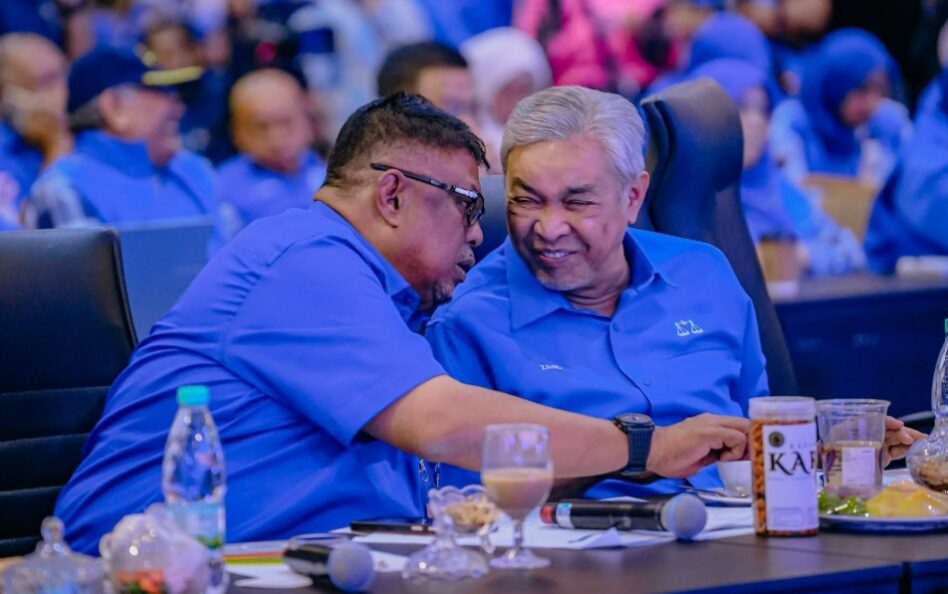
It is obvious that UMNO rather than fading seems more relevant than ever!
All in all, the Melaka state election represents another excruciating defeat for the PH coalition following its disappointing performances in Sabah, Johor and Negeri Sembilan.
In Sabah, the DAP was virtually wiped out of the electoral map. In Melaka, however, the party managed to retain some of its political clout.
It was always expected that the DAP would perform relatively well in Chinese-majority constituencies and – to some extent – in mixed constituencies.
The argument that there is no alternative to DAP, together with the recent political drama surrounding its secretary-general and former Cabinet minister Anthony Loke Siew Fook might have influenced Chinese voters to continue supporting the party.

Nevertheless, DAP appears to be a party that is currently “burning the brightest” before potentially fading from the Malaysian political scene. Its electoral survival in Melaka should not be mistaken for a recovery of PH’s overall political fortunes.
BN-PN pact now a formidable force
The outcome of the Melaka state election provides a clear indication of the changing direction of electoral politics in the country. It suggests that the political landscape is increasingly moving towards a contest between BN-PN and a beleaguered PH coalition.
It will be increasingly difficult for PMX to withstand the political pressure for an early dissolution of Parliament and the calling of the 16th General Election (GE16).
The Melaka polls results have exposed the vulnerability of the PH-led federal government and raised serious questions about its ability to retain power at the national level.
PH can no longer take for granted the support of its traditional constituencies, particularly when its partners are increasingly struggling to maintain their electoral relevance.
DAP’s limited success in Melaka cannot compensate for the broader electoral setbacks suffered by the coalition.

With its victory in Melaka, the BN-PN political alliance has gained considerable momentum. There is now little to prevent this emerging electoral force from taking on PH at the national level.
The Melaka election may well be remembered as a turning point in Malaysian politics, signalling the possible end of PH’s electoral dominance and the emergence of a formidable BN-PN challenge in the next general election.
Anyway, can the stellar electoral performance of the BN-PN combine at the state level translate for the achievement of national power?
If political power at the state level can be translated to federal power, then it possible to speak of the demise of the one-term PH coalition in power.
Whether Anwar can go on for the second term remains a big question mark but nonetheless he would have achieved his dream of becoming Malaysia’s PM during his lifetime.
Editor’s Note: He waited 24 years following his sacking and arrest by twice former premier Tun Dr Mahathir Mohamad in 1998.
It is really unfortunate that he seems to reject the politics of ethnic dominance at a time his hold on power remains rather tenuous! – Nov 15, 2026
Former DAP stalwart and ex-Penang deputy chief minister II Prof Ramasamy Palanisamy is chairman of the United Rights of Malaysian Party (Urimai) interim council.
The views expressed are solely of the author and do not necessarily reflect those of Focus Malaysia.