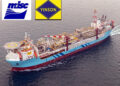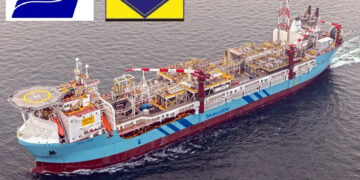


IN OFFSHORE energy, scale is rarely built quickly. Fleets grow one contract at a time through years of bidding, construction and delivery with a contractor’s reputation often takes time to build.
A proposed partnership between MISC Bhd, Yinson Holdings Bhd’s founding shareholders and the Employees Provident Fund Board (EPF) could shorten that path considerably.
It would put two of Malaysia’s most established offshore players on a single platform with the nation’s retirement fund still invested alongside them.
At a glance, that would be a masterstroke for MISC. For Malaysia, it could be a significant corporate win.
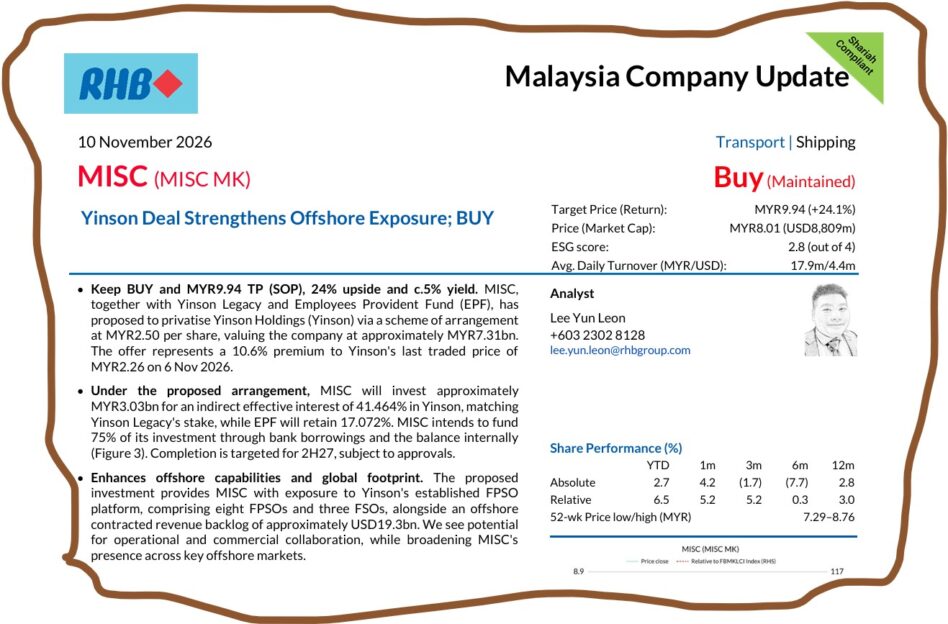
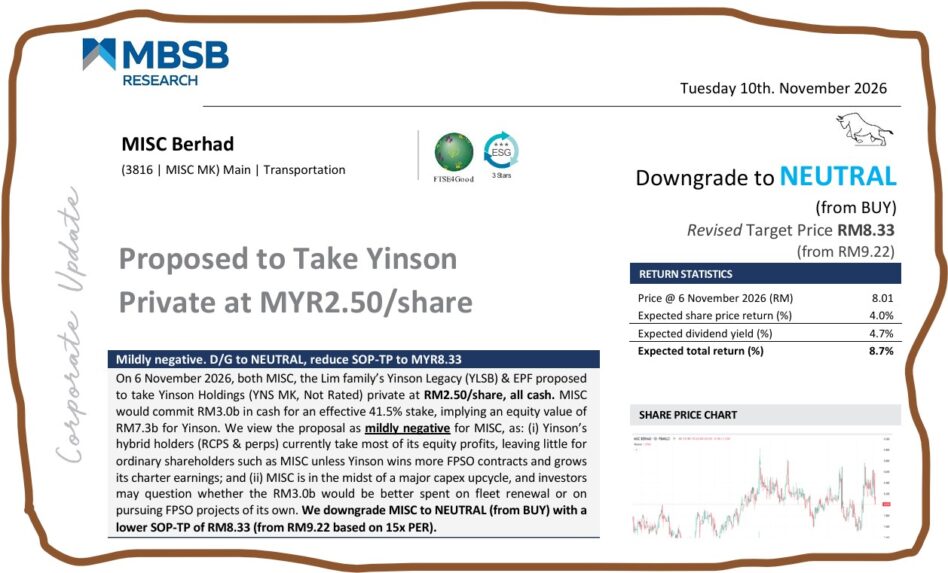
The consortium’s Nov 6 proposal offers RM2.50/share to acquire the remaining 55.2% of Yinson for approx. RM4.03 bil.
Following completion, MISC and Yinson Legacy Sdn Bhd (the major shareholder of Yinson Holdings) would each hold an effective interest of about 41.46% while EPF would retain approx. 17.07% through Kwasa Layar Sdn Bhd (EPF’s wholly-owned subsidiary).
Creating a giant fleet
This synergetic structure brings together three distinct Malaysian strengths: MISC’s maritime and offshore experience, the entrepreneurial capabilities behind Yinson’s international expansion and pension fund EPF’s long-term institutional capital.
Together, they could provide the foundations for a business capable of carrying greater weight in a technically demanding global industry.
Floating production, storage and offloading vessels (FPSOs) are critical infrastructure for offshore energy production. Developing and operating them requires engineering expertise, substantial financing and the ability to manage complex projects over many years.
Success depends heavily on reputation and track record of delivery. Customers entrust contractors with infrastructure central to their production plans. A proven operating record, experienced teams and reliable delivery can determine who qualifies for the next opportunity.
Malaysia already possesses these capabilities across MISC and Yinson. The proposed transaction creates an opportunity to make more of them together.
Rystad Energy’s September analysis illustrates the potential. It estimates that a combination of both offshore businesses could make the combined entity the largest globally by fleet size, outpacing tier-1 contractors such as MODEC and SBM Offshore.
That would give Malaysia a stronger position in an industry where relatively few companies have the credentials and financial capacity to compete internationally.
Any subsequent fleet combination remains a potential development rather than an agreed outcome. Nevertheless, Rystad’s assessment shows what could be within reach: a Malaysian platform with sufficient scale to become a more influential global competitor.
‘Wider outreach, practical timing’
The geographical advantage is particularly compelling.MISC brings a stronger Asian presence and relationships with major international energy companies.
Yinson meanwhile, contributes established African operations and a strong position in Brazil. Rystad identifies these complementary footprints as a central attraction of the prospective combination.
Building such a network independently would require years of bidding, investment and operational delivery. Through this transaction, MISC could gain exposure to that broader business in one move.
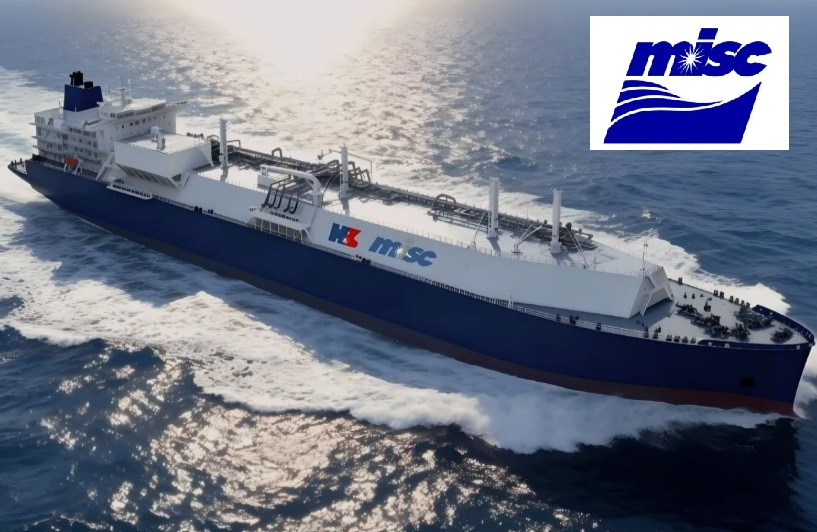
For Malaysia, the significance is that capabilities built by separate home-grown companies could become the foundation for a larger international enterprise.
The country would have an opportunity to strengthen its participation in global offshore investment through a platform already familiar with several important producing markets.
There is also a practical advantage in the timing. Offshore production assets require substantial expenditure before they begin generating charter income.
During construction, owners must manage costs, schedules and commissioning risks. Once vessels enter service, the emphasis shifts towards reliable operations and income from long-term contracts.
Rystad observes that recent deliveries have moved more of Yinson’s portfolio into that operating phase. The proposed partnership would therefore come as earlier investment increasingly translates into contracted cash flow.
Global champs in the making?
This gives the national champion argument a commercial foundation. The opportunity rests on operating assets, established customers and expertise accumulated through delivering projects internationally.
EPF’s participation makes the Malaysian dimension especially meaningful. Under the proposal, EPF would retain its effective shareholding, preserving members’ participation in Yinson’s future performance.
Malaysian retirement capital would remain invested alongside a major Malaysian industrial group and the shareholders who built the business.
That creates a potential connection between international industrial success and long-term returns for Malaysian savers. The outcome will depend on commercial performance but the ownership structure gives domestic capital a continuing stake in the growth opportunity.
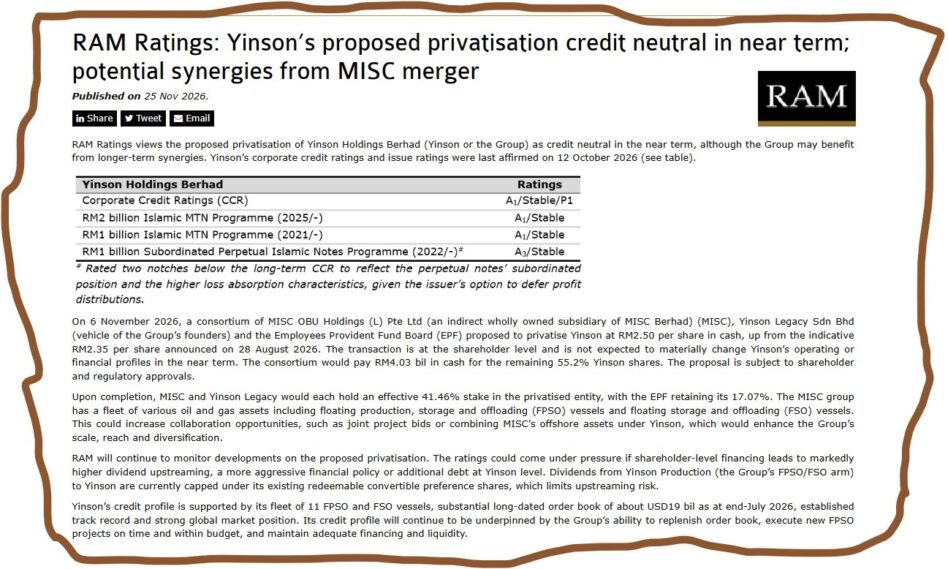
The partnership could also provide a stronger base from which to pursue new projects. RAM Ratings’ Nov 25 assessment identifies potential benefits from joint bidding or combining offshore assets which could broaden the business’s scale, reach and diversification.
RAM views the proposed privatisation as credit neutral for Yinson in the near term.
Execution will determine whether that potential becomes value. Financing must remain sustainable, investment decisions must meet commercial standards, and collaboration must produce tangible benefits.
Global champion status is earned through competitive performance.
The transaction itself also remains subject to decisions and approvals. Yinson clarified on Nov 10 that its board had not accepted the proposal with its response due by Dec 4.
Yet the opportunity deserves recognition. Malaysia has already produced the companies and capabilities. This proposed partnership offers a way to bring them into closer alignment and compete from a stronger position.
In one stroke, MISC could accelerate its international growth while helping create something larger for the country: a Malaysian offshore champion with the reach, expertise and ambition to stand more prominently on the world stage.
At the close of Friday’s (Nov 27) trading, MISC was up 15 sen or 1.89% to RM8.10 with 1.37 million shares traded, hence giving the leading national shipping and maritime energy-logistics group a market cap of RM36.2 bil.
Meanwhile, Yinson closed 6 sen or 2.83% lower at RM2.06 with 5.11 million shares traded, thus valuing the company at RM8.63 mil. – Nov 28, 2026