

Letter to Editor
INview of rising concerns over violence and bullying among school students, a fundamental question we should be asking is: What are we teaching our children?
Recently, a scene from the Hindi film Assiraised a hard-hitting question. The film follows Parima, a schoolteacher who survives gang rape and attempts to return to teaching and resume a normal life.
However, her principal is reluctant to allow her back, explaining that the students she had taught had formed a WhatsApp group sharing memes and distasteful comments about her assault. One student even asked why he had not been invited.
The principal points out that while the school has produced top academic achievers, it has failed to build their character. The scene raises an uncomfortable question: What are we teaching our children if we cannot instil basic values in them?
The scene also highlights how violence and cruelty among young people can extend beyond the physical world into digital spaces, making empathy, morality and responsible online behaviour increasingly important.
Last year, the award-winning miniseries Adolescencesparked a global debate about the influence of social media and online culture on children.
It follows 13-year-old Jamie, who is accused of murdering a female schoolmate. His family appears ordinary and loving, forcing viewers to confront uncomfortable questions about how young people can become exposed to harmful attitudes despite growing up in seemingly stable environments.
The series explores teenage insecurities, rejection, masculinity and the influence of online communities. Cyberbullying, the non-consensual sharing of intimate images and misogynistic content have become part of the digital environment many young people navigate.
Shielding children from the physical world therefore does not necessarily keep them safe. Harmful content can reach them through the apps and platforms accessible on their phones and laptops.
Young people need to understand that rejection does not give anyone the right to punish another person, while expressing vulnerability is not a sign of weakness. Strength should not be defined by dominance or anger.
Across the world, governments and schools are responding in different ways. France has enacted legislation restricting social-media access for children under 15. In England, schools are being supported with measures to tackle misogyny and promote healthy relationships, respect and positive attitudes, while existing guidance includes teaching about issues such as incel culture, consent, power and control.
Denmark’s Klassens tid(class time), meanwhile, provides structured time for students to discuss relationships, conflicts, wellbeing and social development. Such sessions can help children develop empathy, cooperation and a sense of community.
Malaysia has also introduced age-verification measures for social media. Under the current rules, children under 16 cannot open or control their own social-media accounts, although parent-managed accounts are allowed.
But regulations alone cannot teach children empathy.
Parents and teachers need to step in with open conversations and appropriate supervision of children’s digital lives. The notion that “boys will be boys” removes accountability and reinforces harmful stereotypes.
It is normal for children of all genders to experience and express a range of emotions. By listening to children and validating their feelings, parents can build trust and help them understand that other people’s boundaries must be respected.
Children must also understand that bullying can have lasting consequences for both victims and perpetrators.
Teach them empathy, respect, resilience and gratitude. Teach them to accept others as they are, even when they are different from us. Schools should be safe places for learning, not places where hatred, discrimination and prejudice are allowed to take root.
Real education builds empathy. True learning is not about looking down on others but about developing our potential to help others.
Bad parenting includes instilling fear by telling children, “If you do not study, you will end up like them,” referring disparagingly to manual workers.
Instead, we should encourage children to study not merely to achieve personal success, but to use their knowledge and abilities to make the world better and lift others.
True education is built on compassion and kindness.As a saying goes: “If to correct you must humiliate, then you do not know how to teach.”‒Oct 5, 2026
Dr S. Mathana Amaris Fiona
Puchong, Selangor
The views expressed are solely of the author and do not necessarily reflect those of Focus Malaysia.
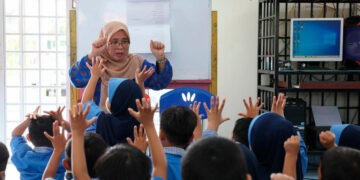
Main image:Bernama