

KUALA LUMPUR: France is opening up its energy experience to Malaysia, particularly in hydropower, low-carbon, renewables, carbon capture, nuclear and other power resources already operational in France.
Deputy head of mission at the Embassy of France in Malaysia Olivier Sigaud said growing geostrategic uncertainties have affected the supply chain for oil, gas and fuel, through the cost of living for people and operating costs for companies.
“So, what can France do with Malaysia to address the challenge of energy transition? First, we can share our experience.
“Around 98% of France’s electricity is low-carbon, thanks largely to nuclear energy and hydropower. We have extensive hydropower experience and can share that expertise with Malaysia.
“We can also share our experience in developing a regulatory framework. As you know, the EU energy market is fully integrated. In Malaysia, as part of Asean, we are very interested in the Asean Power Grid because it is an important part of strengthening the resilience of the regional electricity network while also improving efficiency and cost effectiveness.
“That is another area where we can share our experience,” he told delegates at the Schneider Electric Innovation Day Kuala Lumpur 2026, held under the theme ‘Advancing Energy Tech for Malaysia’s Future’ today.
Sigaud said France can help connect French industry with the relevant players here in Malaysia.
“As you may know, France already has a significant footprint in Malaysia, with around 600 companies providing some 30,000 jobs. Companies such as Schneider Electric, which has been here for decades, have contributed significantly to this presence and helped build Malaysia’s industrial ecosystem,” he added.
Sigaud said France can bring a broad range of expertise, from power generation and traditional energy companies such as Électricité de France, a French multinational electric utility company owned by the French government, and TotalEnergies, to electricity and energy management, with flagship companies such as Schneider Electric.
“But we also have to think about the future, and that means investing in human capital, training and research and development.
“And I think Malaysia is one of the most promising countries in terms of its digital ecosystem. From the upstream, where you have a very vibrant semiconductor industry that is trying to move up the value chain and provide the chips and computing capacity needed for data centres, to very good data connectivity, including subsea communication cables,” Sigaud said.
Speaking on efforts to attract more investments, Malaysian Investment Development Authority (Mida) deputy CEO (investment promotion and facilitation) Zalina Zainol said Malaysia is moving towards a more technology-intensive, sustainable and high-value economy.
Malaysia recorded RM218.5 billion in approved investments across 2,746 projects in the first half of this year, with more than 99,000 jobs expected to be created.
“But attracting investment is only part of the story. We also need to make sure these approvals translate into projects on the ground, create good jobs, provide opportunities for businesses and bring long-term value to the economy,” said Zalina.
She added that sectors such as data centres, semiconductors and advanced manufacturing were creating new opportunities for Malaysia, as the country sought to strengthen its position in higher-value industries.
In the first half of this year, data centre and cloud computing projects accounted for RM95.8 billion in approved investments, Zalina said. “Digital infrastructure is an important part of this transformation. It supports AI, cloud computing, automation and other advanced technologies.”
Digital infrastructure would support Malaysia’s ambition to develop 3,000 smart factories by 2030, she said. “But these investments need the right infrastructure. We need reliable energy and water, digital connectivity, skilled talent and sustainable solutions.”
Zalina said Malaysia has built strong foundations in these areas, but as investment needs evolve, its infrastructure must keep pace. “Investment readiness and infrastructure readiness have to move together.”
However, she added, the focus should not be limited to infrastructure, and more effort is needed to ensure Malaysian businesses and talent also participate in and benefit from the investments coming into the country.
Schneider Electric Innovation Day Kuala Lumpur 2026 brought together leaders from government, utilities, and industry to discuss how electricity demand, grid readiness, cooling, water availability, and decarbonization are becoming increasingly important considerations for investors, especially with the growth of AI technologies.
During panel discussions, industry stakeholders explored how Malaysia can further strengthen the infrastructure needed to support its continued growth.
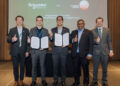
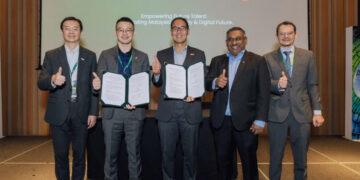
The event also marked the formation of a partnership between Schneider Electric and Universiti Tenaga Nasional. The collaboration brings together Schneider Electric’s global energy technology expertise and the university’s research and talent development capabilities, strengthening France-Malaysia cooperation in areas that can help Malaysia prepare its energy systems and workforce for future growth.