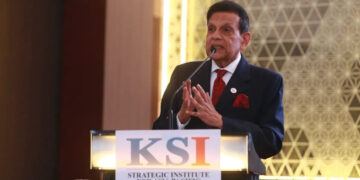







KUALA LUMPUR: Malaysia must strengthen its human capital as a strategic economic asset to remain competitive amid rapid technological, geopolitical and economic changes, said Economic Club of Kuala Lumpur chairman Datuk Seri Mohamed Iqbal Rawther.
He said the pace of change globally has made it increasingly important for organisations to develop a workforce that can adapt to shifting business conditions, particularly as artificial intelligence (AI) and digitalisation reshape jobs and the skills required.
“Human resource is no longer about payroll, compliance or industrial relations. That view today, in my mind, is obsolete,” Iqbal said in his welcome speech at the 2026 Human Resources Leadership, Talent & Top Employers Forum, themed “Managing and Navigating Organizational Change and Transformation in a New Era today.
He said human resource (HR) strategy must instead be embedded into corporate strategy, as companies face shorter planning horizons amid geopolitical fragmentation, changing trade dynamics, market volatility and rising operating costs.
“Whatever the overarching goal of the organisation is, whether it is digital transformation, sustainability or regional expansion, the talent strategy must be fully linked to that mandate,” Iqbal said.
He said the disruption facing businesses is increasingly translating into workforce challenges, with employers having to reassess their hiring, retention and skills requirements as economic and technological conditions change.
He said AI presents both significant opportunities to improve productivity and legitimate concerns among workers over the future of their jobs and skills.
As some routine functions become increasingly automated, organisations will need to focus more heavily on reskilling and upskilling their employees to ensure they can transition into new or evolving roles.
However, Iqbal cautioned that technological progress should not come at the expense of human judgement.
While businesses are becoming increasingly data-driven, he said, there is a distinction between having data, information and knowledge, and having the wisdom to make sound decisions.
“Data is important, algorithms are important, but wisdom is also important,” he said, stressing the continuing role of human judgement in organisations.
Iqbal said the workforce strategy of companies should be built around three key areas – alignment, retention and rewards, and organisational culture.
Greater alignment is needed between employees’ objectives, corporate priorities and the national economic goals set out under the 13th Malaysia Plan.
Companies also need to consider how forthcoming policy and budget measures could affect employee costs and workforce planning, Iqbal said, adding employers need to strengthen retention by rewarding high performance, providing meaningful career opportunities and prioritising employee wellbeing.
He highlighted the growing importance of human capital to national development, pointing to Singapore as an example of how a country can turn its people into a major source of economic value.
He said Singapore has less natural resources than Malaysia but has built its economic strength by investing heavily in its human resources and developing them into human and social capital.
The lesson for Malaysia, he said, is that human capital should be viewed as more than an HR consideration, as the quality and adaptability of its workforce would ultimately influence the country’s economic competitiveness.
“Human resource becomes human capital, human capital becomes social capital, and social capital becomes economic capital,” Iqbal said, adding that this will become increasingly important as Malaysia pursued higher-value economic activities and sought to respond to technological disruption.
Companies, therefore, need to move away from legacy operating models and develop workforce strategies that could adapt to changing market conditions, Iqbal stressed.
The challenge, he added, is not simply to adopt new technologies but to ensure people work alongside them while retaining the human capabilities needed for leadership, judgement and decision-making.
He said businesses should consequently view workforce development as a long-term investment rather than merely an administrative cost.
The shift would require closer integration between HR, business leaders and other strategic functions, particularly as companies navigated digital transformation, sustainability goals and regional expansion.
Iqbal said the ability to develop, retain and deploy talent effectively would ultimately determine whether organisations could convert technological and economic opportunities into sustainable growth.
The emphasis on human capital comes as businesses face a rapidly changing operating environment, with employees also having to contend with higher living costs, changing career expectations and uncertainty over how technology will affect their roles.
For employers, Iqbal said, the task is therefore to create organisations capable of adapting to these changes while giving employees a clear pathway to develop alongside the business.
“Companies that successfully align their people, strategy and culture will be better positioned to navigate disruption and build sustainable long-term value,” Iqbal said.