


Malaysia is looking to turn its growing digital infrastructure base into a wider economic advantage, with the next phase of growth centred on developing companies, talent and technologies that can capture more value from the country’s investment in data centres, cloud and artificial intelligence (AI).
Digital Minister Gobind Singh Deo said Malaysia had recorded more than RM144 billion in approved data centre and cloud commitments, but said the next question was how much economic value the country could derive from that infrastructure.
“Who will actually profit from this infrastructure?” he asked at the Malaysia Digital Acceleration Forum 2026 (MDX 2026).
Gobind said a fully operational traditional data centre typically employs only a few dozen people, while an AI service industry, cloud operation hub or regional AI headquarters could generate much larger employment and wider economic activity.
“Our job today is to ensure that we don’t just host digital infrastructure. We are looking to build it, we are looking to run it in terms of operations, and ultimately, we are looking to own it,” he said.
The distinction is increasingly important as AI changes the economics of digital services.
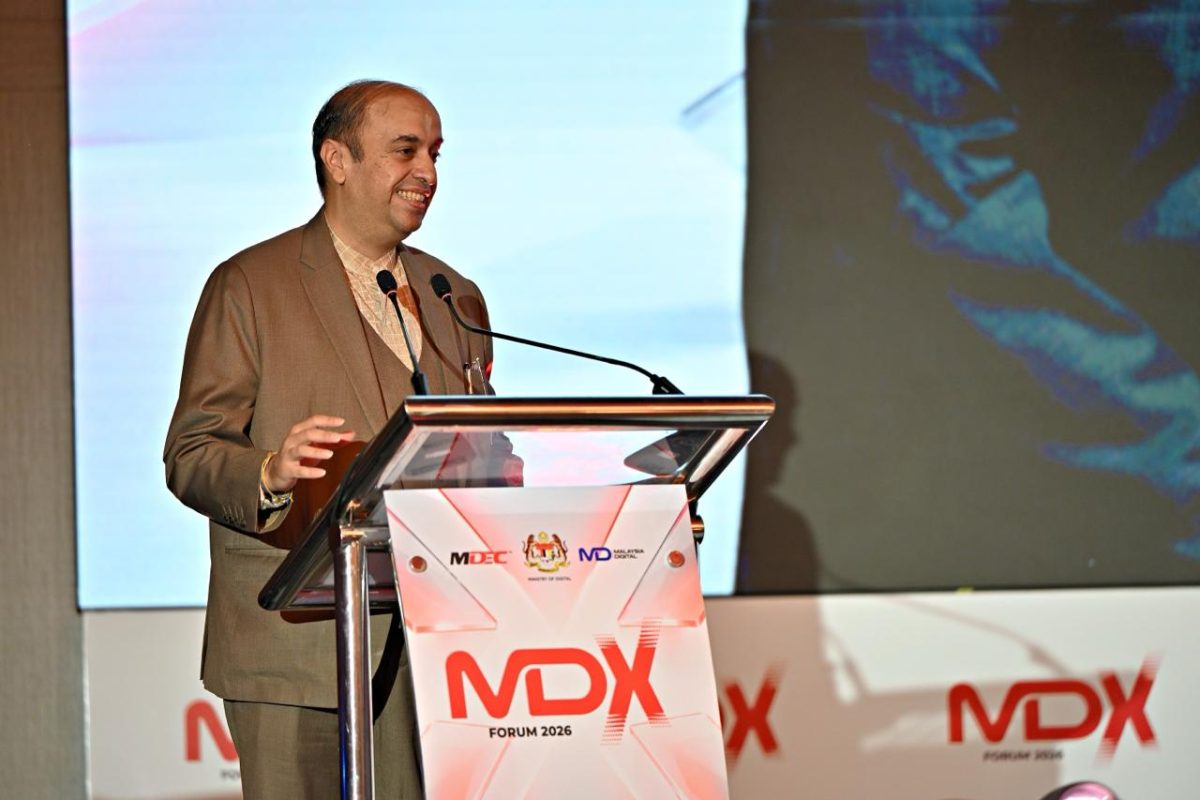
For MDEC chairman Ganesh Kumar Bangah, the priority is now to move businesses beyond basic AI adoption and towards deeper changes in how they operate.
“AI adoption is going to speed up, but adoption is not the same as transformation,” he said.
Ganesh outlined four stages of AI transformation, from agentic build and agentic software-as-a-service to agentic workforce and, ultimately, agentic transformation, where businesses redesign workflows around AI.
The shift could allow Malaysian companies to increase their productive capacity without relying solely on expanding their workforce.
Ganesh said AI could help a relatively small country such as Malaysia compete more effectively with larger economies by allowing businesses to use AI agents to perform tasks that would otherwise require significantly more resources.
But adoption also brings a practical constraint: access to computing power.
Ganesh said cost was one of the major barriers facing SMEs and smaller technology companies, even as Malaysia attracts substantial investment into data-centre infrastructure.
MDEC is developing the National AI Compute Exchange (NACX) to connect AI compute providers, model developers and solution partners with organisations seeking affordable, scalable and sovereign AI capabilities.
MDEC says the platform is intended to give government agencies, GLCs, GLICs, enterprises, SMEs, researchers and academic institutions easier access to AI compute, models and services from multiple providers.
The exchange would allow data centres to contribute compute capacity that could subsequently be made available to SMEs, startups and Malaysia Digital companies at more effective pricing.
The other challenge is knowing how to use that capacity.
MDEC is developing industry-specific AI playbooks to help businesses understand how AI can be applied to their respective sectors, particularly SMEs that may recognise the need to adopt AI but lack the expertise or resources to determine where to begin.
For MDEC, the next measure of progress is whether these initiatives translate into stronger businesses, greater competitiveness, SME growth and more Malaysian-developed products.
As of Q2’26, more than 7,000 companies had been awarded Malaysia Digital status, with more than 4,400 active. In Q2 alone, 190 companies were approved, including 44 primarily involved in AI.
AI, data centres, cloud and global businesses accounted for 70% of new approvals, according to MDEC.
The figures reflect an increasingly interconnected digital economy, where infrastructure providers, technology companies, users, investors and talent are becoming part of the same value chain.
That value chain also extends beyond the country’s established digital centres.
MDEC has state offices in Johor, Penang and Kuching, reflecting efforts to spread the benefits generated by digital investment and infrastructure across different parts of Malaysia, with individual states contributing their own strengths.
Opportunities span the semiconductor and advanced manufacturing industries in Penang and Kulim, developments in Johor and industries in Sarawak, where AI can increasingly be applied across different economic activities.
This creates a role for government beyond setting policy.
Through the Government Innovation Initiative (GII), MDEC is looking to bring public-sector problem statements to technology companies and allow Malaysian solutions to be tested in actual government environments.
Gobind said this could shift government from being solely a purchaser of technology to becoming a platform through which Malaysian companies can demonstrate and develop their solutions.
The approach is part of a wider effort to build the institutional foundations needed for an AI-driven economy.
Gobind said Malaysia needs stronger data foundations, AI governance, cybersecurity, digital trust and talent, alongside policies that allow businesses to adopt new technologies with confidence.
The government established AI Malaysia Berhad in July 2026 under the Ministry of Digital as the country’s national AI entity, with the ministry saying it will coordinate the national AI agenda and drive implementation of the National AI Action Plan 2026–2030 towards the AI Nation 2030 aspiration.
The government is also developing an AI Governance Bill based on a risk-based approach, aimed at providing safeguards and legal certainty while supporting innovation.
For MDEC, the transition represents a significant evolution from the organisation’s origins in ICT and the Multimedia Super Corridor.
Ganesh said MDEC, which is marking its 30th year, has seen Malaysia’s digital economy progress through successive waves of technology, from ICT and the internet to digitalisation and now AI.
The latest shift is towards AI agents capable of executing and coordinating tasks, raising the prospect of smaller companies operating with significantly greater productive capacity.
That also changes what Malaysia needs to compete for.
Rather than focusing solely on attracting more infrastructure, the opportunity is to build the companies, capabilities and talent that can operate on top of it.
MDX is intended to support that connection by bringing government, investors, businesses and technology players together, while giving Malaysian companies opportunities to showcase their capabilities and develop partnerships.
For SMEs, the emphasis is on making AI practical and commercially relevant. For technology companies, it is about access to capital, talent, customers and international markets.
Ultimately, the test will be whether Malaysia’s digital infrastructure helps produce a deeper pool of Malaysian companies and capabilities that can compete beyond the domestic market.