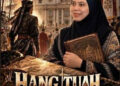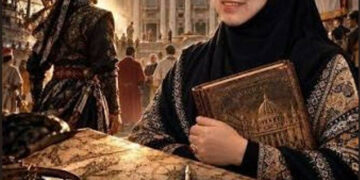


RIGHTIST scholar Dr Solehah Yaacob has staked claim that Hang Tuah – the legendary warrior, admiral (laksamana) and diplomat in traditional Malay literature and mythos – had during his lifetime sailed beyond China to as far as Mekkah, Turkey, Egypt and even Rome to meet the emperor with a Vatican City stop-over.
Brushing aside the perception of sceptics, the Arabic linguistic specialist whose contract was terminated by the International Islamic University Malaysia (IIUM) effective April 27 is adamant that Hang Tuah existed and is neither myth nor legend as claimed by colonialist historical sources.
“Is a story labelled as a hikayat (saga/tale) necessarily untrue?” asked the Kelantan-born academician in an apparent prelude to her “Lost Malay Civilisation Seminar 5.0” slated for Nov 8-10 in Kuala Lumpur.
We must examine how a manuscript was written, the terminology used, the narrator and other sources available for comparison.
The same applies to the terms “myth” and “legend”. Are these labels sufficient to determine whether a story is true or otherwise? Instead of simply accepting or rejecting the idea, we need to revisit the manuscripts, language, sources and historical context.
Perhaps the question regarding Hang Tuah is not merely: “Did he exist or not?”
But rather “to what extent have we truly examined the sources concerning him?” for there may be history that is not lost but simply not fully read or understood by us.
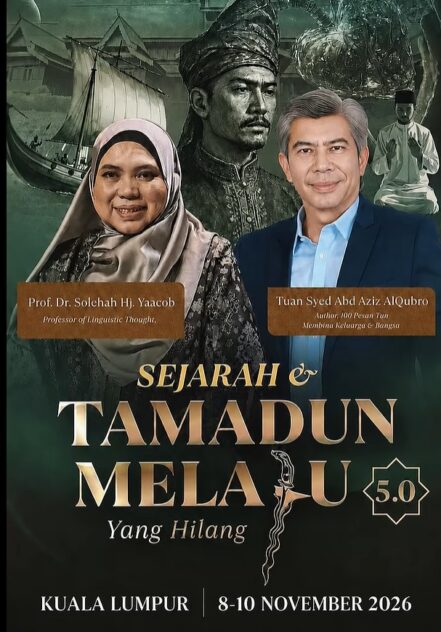
Contradicting modern day history
To fortify her argument, the controversial scholar has inadvertently cited Melaka Chief Minister Datuk Seri Ab Rauf Yusoh who recently stated that the National Archives plans to visit their Vatican counterpart to search for historical manuscripts or evidence that might link Hang Tuah to the spiritual and administrative heart of the Roman Catholic Church.
Additionally, Solehah whom academician and avid political commentator Prof James Chin touted as “good in fanning the ketuanan Melayu Islam (KMI) (literally, “Malay Muslim supremacy) agenda” also touched on the “Leonardo da Vinci connection”.
Apparently, researchers from Universiti Putra Malaysia (UPM) have in recent years mooted a theory based on European manuscripts whereby they hypothesised that a historical letter or document written by a representative of the “Emperor of Rome” (believed by them to involve Leonardo da Vinci) made mention of a Malaccan “Laksamana Orang Muda” (young admiral).
However, historians emphasise that no actual record exists proving Hang Tuah ever set foot in Rome or Vatican City.
Even the late Prof Emeritus Tan Sri Dr Khoo Kay Kim (1937-2019) who is much revered in the rightist fraternity had in 2012 noted that there was no historical evidence of Hang Tuah’s tangible existence.
The early 18th-century text Hikayat Hang Tuah does poetically describe the admiral travelling to “Benua Rom” (the Roman Empire/Ottoman realms) on diplomatic missions but this is a literary chronicle while the Vatican City state itself did not exist in its modern form during the 15th-century Melaka Sultanate.
According to modern day historical accounts, Johor’s Sultan Abu Bakar was the first Malay Muslim ruler to visit and meet the Pope in Rome and the Vatican, having an official audience with Pope Leo XIII on April 24, 1885.
In recent times, the recorded high-profile visit by a Malay Muslim leader to the Vatican was that by Tun Dr Mahathir Mohamad who met Pope John Paul II during his first premiership stint in June 2002.
This was followed by Datuk Seri Najib Raza, who visited Pope Benedict XVI in July 2011 to officially establish diplomatic relations between Malaysia and the Holy See.
Like it or not, Solehah’s latest intriguing revelation has received acclaims from like-minded rightists who further encouraged her to unearth more profound discoveries on the greatness of the Malay civilisation.
As one aptly put it, “Islam rose in the east … tak hilang Melayu di dunia (famous quote often attributed to Hang Tuah) has turned out to be true now”. – Oct 9, 2026