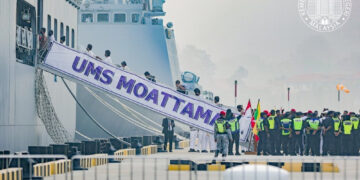


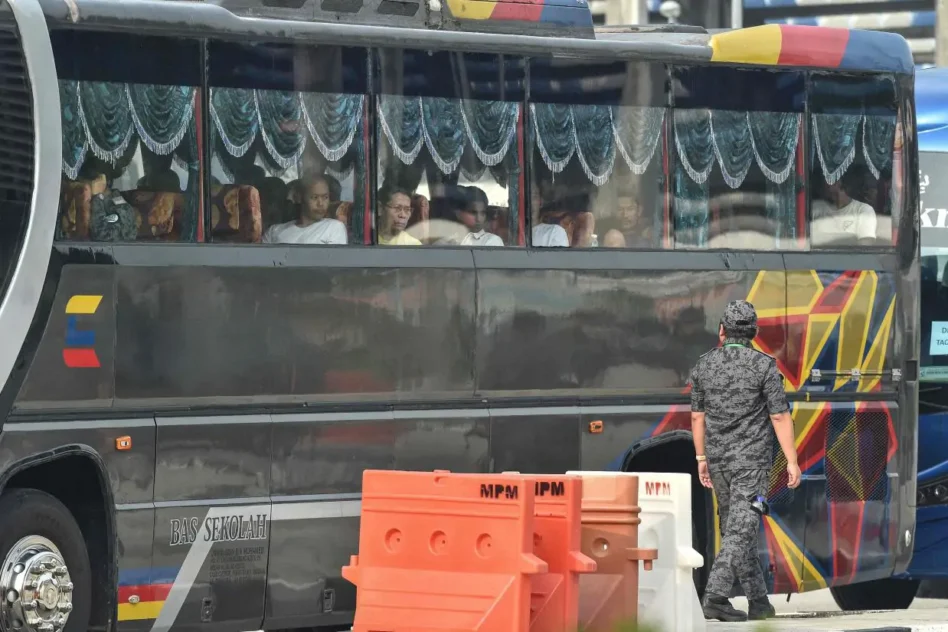
WHENMalaysia repatriated nearly 1,500 Myanmar nationals to their conflict-ravaged homeland on Sept 29, questions remained over their safety and what would happen to them after their arrival.
The group of 1,476 people travelled aboard two Myanmar naval vessels and a hospital ship, arriving at a naval base in Thanlyin, near Yangon, on Oct 4.
They were the first batch in a programme under which Malaysia plans to return 5,000 Myanmar nationals in phases.
AFP journalists reported that hundreds of family members gathered outside the naval base to welcome the returnees.
While some relatives were allowed through the gates, others were told that the returnees would be taken to different locations in the Yangon region before they could reunite with their families.
Although their immediate circumstances were reported, independent information about their subsequent whereabouts and treatment remained limited.
Some relatives feared their loved ones could face conscription by the military or ethnic armed groups.
Commenting on the repatriation, the United Nations High Commissioner for Refugees (UNHCR) has said,“no one should be returned to a country where they may face persecution, torture or other serious threats to their life and freedom”.
That warning is particularly relevant in Myanmar, where the military seized power in a 2021 coup and the country has since been engulfed in widespread armed conflict.
What might await those who have returned? The young and able-bodied might be forced to work as porters for government soldiers or as human shields against the rebels or as landmine sweepers in combat zones.
For the women refugees, stories abound of brutal rape by military soldiers who use “rape as a tactic to terrorise, shame, and subjugate ethnic communities”.
All the refugees might be tortured to confess that they are supporters or sympathisers of the Karen National Liberation Army (KNLA), the main rebel group fighting the junta, and get summarily executed.
According to the United Nations, “thousands of people were killed and millions displaced”in the wake of the civil war which is still ongoing.
The International Criminal Court prosecutor has applied for an arrest warrant for Myanmar’s military leader, Min Aung Hlaing, over alleged crimes against humanity involving the deportation and persecution of the Rohingya. As of October 2026, the application remains pending before the court.
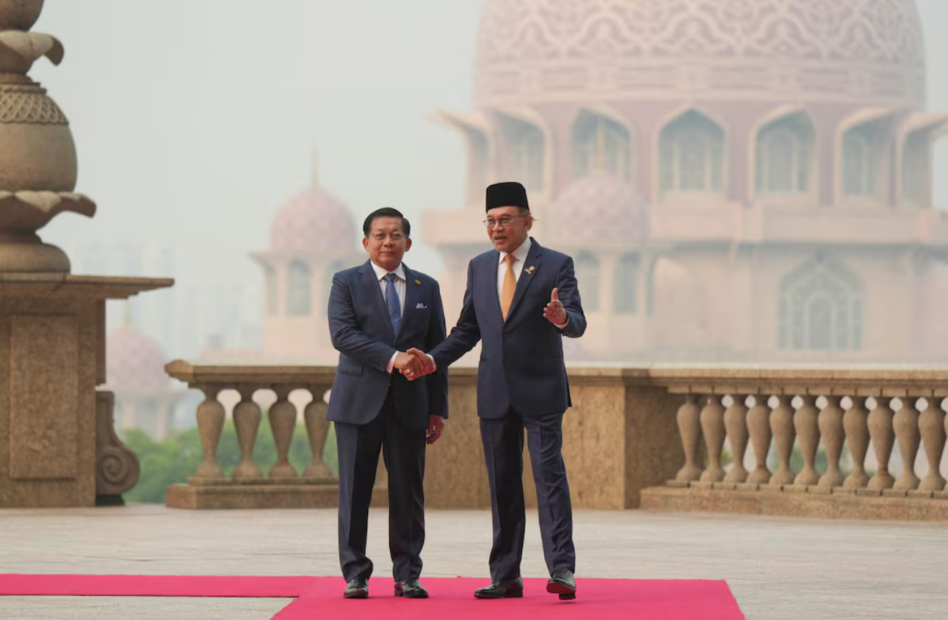
Yet Min Aung Hlaing, who became president in April 2026, was welcomed in Malaysia by Prime Minister Datuk Seri Anwar Ibrahim during talks on bilateral relations and the return of Myanmar nationals.
The Malaysian government has maintained that the repatriation programme is voluntary. However, UNHCR expressed concern that the returnees had been held in immigration detention and that the agency had not been allowed to meet them to assess whether their decisions were genuinely free and informed.
Anwar has said that no Rohingya were included in the first batch. Nevertheless, Myanmar is home to numerous ethnic communities affected by the conflict, including the Karen and Chin. People fleeing persecution deserve protection regardless of their ethnicity or religion.
Monitoring the returnees is therefore crucial. Myanmar’s media environment presents formidable obstacles to independent scrutiny.
Since the 2021 coup, authorities have revoked media licences, detained journalists and forced news organisations into exile.
The Independent Press Council of Myanmar (IPCM), established in Thailand in December 2023, continues to operate from Chiang Mai.
According to the council, more than 200 journalists had been arrested since the coup, 27 remained imprisoned as of Jan 15, 2026, and the military had revoked the licences of 15 media outlets.
Myanmar Now, an independent news service, was among the outlets targeted after the coup. The junta revoked its media licence and raided its office, forcing journalists into hiding and exile. The organisation continues to operate from Melbourne, Australia.
The junta has also reportedly sought Interpol Red Notices against exiled journalists and opposition figures, including those associated with Myanmar Now.
According to the news service’s reporting, the effort failed. The episode illustrates the risks faced by journalists attempting to document abuses from abroad.
So, who is going to give Malaysia an update on the plight of the returnees? Perhaps, the Malaysian embassy in Myanmar can monitor the situation there and send periodical reports about their condition.
However,this could be an exercise in futility because foreign embassies located in Yangon and Naypyidaw (the capital) operate in a very restrictive environment.
Perhaps, the IPCM and Myanmar Now can collaborate and source information from Myanmar civilians about the plight of the returnee refugees and upload their stories on their respective portals.
Malaysia should not regard the completion of a repatriation operation as the end of its responsibility to address credible concerns about the returnees’ safety.
It should seek reliable information about their whereabouts, press for access where possible, and work with international agencies to strengthen safeguards before further returns take place.
As Malaysia proceeds with further repatriations, the essential question remains: who will ensure that those returning are safe, and who will speak up if they are not?
Without credible monitoring and accountability, the fate of these returnees risks remaining uncertain long after their ships have reached shore.‒Oct 14, 2026
Phlip Rodrigues is a retired journalist.
The views expressed are solely of the author and do not necessarily reflect those of Focus Malaysia.
Main image: KementerianDalam Negeri Malaysia