

GEORGE TOWN: Penang is looking to medical technology (medtech) as the next phase of its manufacturing growth, building on more than five decades of expertise in semiconductors and electronics.
Penang Chief Minister Chow Kon Yeow said the state’s medtech sector is no longer a niche industry but a pillar of its high-value manufacturing ecosystem.
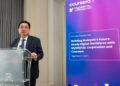
“Over half a century ago, Penang bet its future on semiconductors. That bet built the island we know today. Medtech is the next chapter of that story, where precision manufacturing serves human health,” said Chow during his speech at the Malaysia MedTech Industry Summit 2026 on Tuesday.
Penang is home to seven of the world’s top 30 medtech companies, including Abbott, Boston Scientific, B. Braun, Smith+Nephew, STERIS, Dexcom and Intuitive Surgical.
Between 2021 and mid-2026, Penang recorded RM238 billion in exports of optical, precision, medical and surgical instruments, accounting for an average 64% of Malaysia’s total in this category.
Put simply, nearly two out of every three ringgit Malaysia earns from these exports comes from Penang, Chow said.
He said medtech was no longer a niche sector in the state but a pillar of its high-value manufacturing ecosystem, building on the synergy between electrical and electronics (E&E) and medical technology.
“For over 50 years, we have built excellence in semiconductors and advanced electronics, where precision and automation are essential. These competencies translate directly into surgical instruments, implants and high-accuracy medical devices,” he said.
Chow said Penang had not built its medtech ecosystem from scratch but had built on existing capabilities and moved them into higher-value applications.
From 2021 to the first quarter of 2026, Penang secured RM2.3 billion in approved manufacturing investments in scientific and measuring equipment, including medtech, across 40 projects, creating nearly 4,500 jobs.
“That’s 4,500 Penang families whose livelihoods are now tied to making the world healthier,” he said.
More than 20 local medtech companies also produce MDA-registered devices, ranging from orthopaedic implants and surgical instruments to wound care, dental products, infection-control solutions and medical consumables.
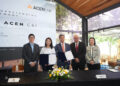
AMMI, established in 1989, represents Malaysia’s medical technology industry, with members including global medical device manufacturers as well as local companies.
Chow said the combination of global leaders and homegrown companies gave Penang one of the strongest concentrations of medtech capabilities in Southeast Asia, positioning it alongside established offshore hubs such as Puerto Rico, Ireland and Costa Rica.
He said the sector fitted squarely within Penang2030, the state’s vision of a family-focused, green and smart state, with the focus now shifting from manufacturing scale to manufacturing value.
This included more design, research and development, regulatory and testing capabilities being carried out locally rather than focusing solely on assembly.
Chow also said the state was working with industry on industry-academia partnerships to develop the engineers, technicians and quality specialists needed by the sector.
He called for more local SMEs to move up the value chain from contract suppliers to MDA-registered device makers in their own right.
“The 20 local companies we have today should be 40 tomorrow,” he said.
Chow also urged Ammi members to tell the state government what was slowing the industry down so that it could work with them to address the problems.
“The devices made here are already saving lives around the world. We intend to make many more of them,” he said.